Let the Right One In vs. Let Me In: Bleak landscapes, creepy kids and half-assed CGI cats

let the right one in vs. let me in
Standard

BY ADAM FOX

Adolescent vampires, as they pertain to horror, represent a relatively unexplored genre. Maybe I should specify before incurring the wrath of Stephenie Meyer disciples everywhere: Adolescent vampires as the archetypal monsters-under-the-bed are a bit of an unknown commodity.

In fantasy lore, it’s probably understood that humans would wait until they’re at twenty-something Brad Pitt levels of attractiveness and physique before taking the immortality plunge. Why let the fangs sink in well before you develop a devil-may-care smile and a dashing ponytail?
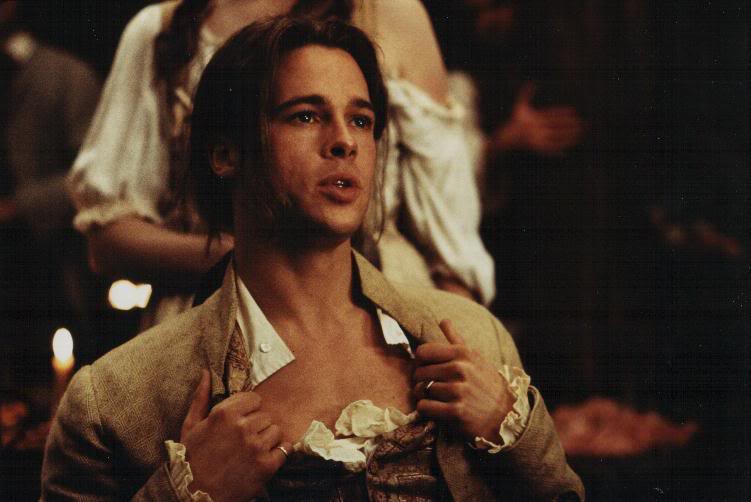
interview with the vampire

“I’m … too sexy for my shirt.”

Perhaps this is why I felt Let the Right One In, based on the Swedish novel of the same name, was so groundbreaking the first time I watched it. Little kids (in all of their inherent creepiness) have been done to death in horror films, dating back to 1976’s The Omen and continuing through 2010’s Insidious. It’s the innocence paired with evil, along with active imaginations, that make the young such scary vectors of the paranormal.
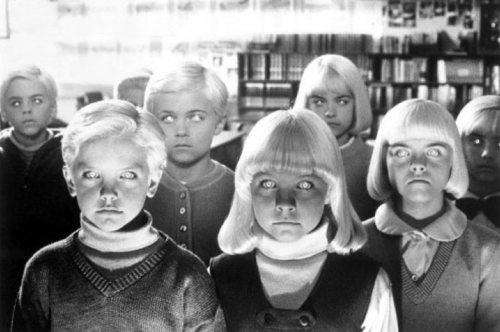
horror kids

Damn(ed) meddling kids!

Let the Right One In—available on Netflix Instant—bites into this formulaic trope with fresh fangs and manages to give it new life. Bullied 12-year-old boy Oskar makes friends with a recently arrived neighbor named Eli, a girl around his age. After a little bit of hesitation on both ends, the two develop a very close friendship. Oskar soon discovers that Eli isn’t quite what she seems, and is in reality an ageless vampire that requires daily feedings of fresh human blood to remain satisfied.

(MINOR SPOILERS AHEAD) After Eli’s human caretaker dies, Oskar assumes the role of her chef, wrangling human prey for her consumption. Eli eventually has to leave amid the unexplained disappearances of her victims, but not before she returns the favor and helps Oskar in one of my favorite final scenes in any horror film. Ever.

This movie was remade rather unnecessarily for American audiences in 2010 under the moniker Let Me In. The film wasn’t bad per se, but rather echoed the laziness of Hollywood in churning out unoriginal, low-risk product. To make up for this, director/screenwriter Matt Reeves changed a few components of the original, some for better and some for worse. So it wasn’t just Psycho, in color, starring Vince Vaughn.
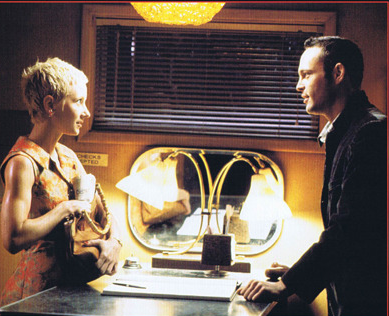
psycho

“My hotel’s so fuckin’ money and you don’t even know it! I got this peephole for watchin’ all the beautiful babies.”

LOCALES: Wintry Sweden vs. barren Los Alamos

Let the Right One In’s environment is mysterious, still and snowy. For anyone who’s ever lived in cold climates that receive lots of the white stuff, there’s sort of a blanketing quiet that is the signature of the season. It lends itself so well to the film’s disturbing and contemplative tone, and the external shots are downright eerie.

let the right one in

Several scenes in Let the Right One In were shot in Luleå—a coastal city in northern Sweden with a subarctic climate.

In Let Me In, they choose the sandy scientific haven Los Alamos, NM as the backdrop. It’s not an awful choice for a horror film by any stretch, but you don’t see enough of the environment for it to be a major player like it is in the original. There’s some spooky shit that occurs in rural New Mexico that doesn’t involve meth or Los Pollos Hermanos distribution lines, but the remake doesn’t quite spotlight the “where” as effectively as the original. It just sort of comes across as Anytown, USA, which was disappointing for someone who lived for several years in New Mexico and knows how disquieting the desert landscape can be.

ACTORS: Kåre Hedebrant & Lina Leandersson vs. Kodi Smit-McPhee & Chloë Grace Moretz

Kåre (Oskar) and Kodi (Owen) capture the awkward dispositions prescribed to their respective characters quite masterfully. Both are bullied loners in their worlds, saving things like newspaper clippings reporting gruesome crime scenes while also electing to stay indoors at all times where it’s safe. The real edge of the original, however, comes in the strength of Lina’s performance (Eli) vs. Chloë’s (Abby).

Oskar

Oskar (Team Eli) and Owen (Team Abby)

Chloë Grace Moretz is a fine child actress who is no stranger to the genre, having appeared in a starring role in yet another horror remake (2005’s The Amityville Horror), but she’s just not … spooky enough? An important component of the vampiric character is that her/its backstory is never fully explained and is, for all intents and purposes, androgynous (alluded to in both films).

Lina’s Eli is neither too feminine nor masculine, and her eyes depict the knowledge and experience of someone who would be many years her senior. A difficult casting choice to be sure in choosing someone who is 12 years old and is in actuality thousands (?) of years old, but it’s an element of believability I felt the original film payed a significantly larger amount of attention to.

SPECIAL EFFECTS / CGI: Let the Right One In vs. Let Me In

It’s not all doom and gloom for the Americans. Let Me In had a much greater budget to work with than its predecessor did, and it certainly shows. Something I could never truly get over in the original film was a scene involving a person spontaneously combusting, and a room full of cats. Oddly enough, it wasn’t the fire I took offense to, but the litter of computer-generated cats. What is intended to be a shocking scene displaying how once again the animal kingdom is privy to any type of evil activity turned out to be nothing more than a lazily executed internet meme. I’m not positive on the animal laws in Sweden and how they pertain to treatment/screen time (I know the states have since revised their laws following 1980’s Cannibal Holocaust), but the whole scene is a little bit goofy.
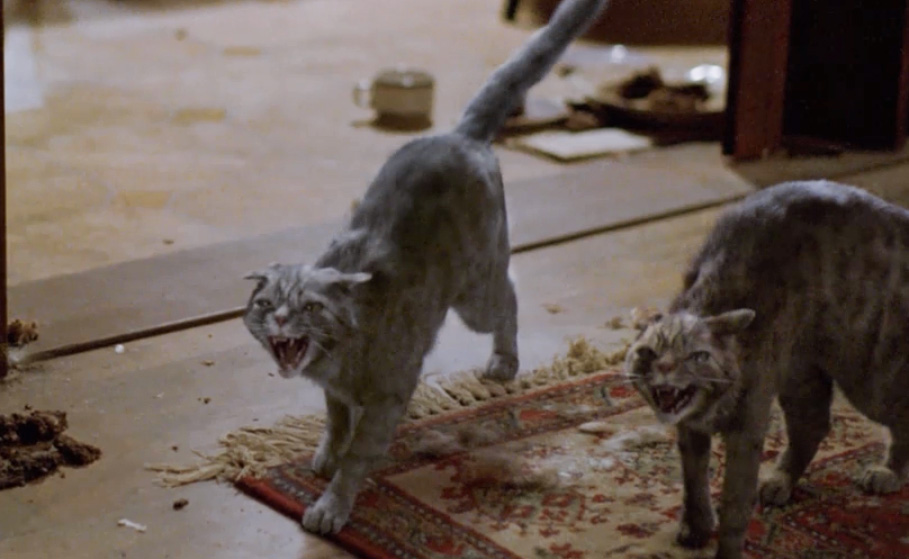
let the right one in cats

Bad kitties! … worse CGI

All said, both films are certainly worth a watch, especially the original version (and its excellent corresponding novel). Let Me In and Let the Right One In offer a welcome departure from both found footage dump-offs and toned-down PG-13 monsters that have been cluttering the modern horror shelves.

Vampires have always been the “thinking man’s villains” of the genre—their clout further cemented by somewhat fictionalized historical tie-ins. It’s that foothold in reality, however misconstrued it may be, in which horror films really manage to hit their groove. Both LMI and LTROI prove that it’s still possible to breathe life into a genre without trying to completely reinvent the wheel.

Let the Right One In  (Available on Netflix Instant)
IMDb: 8.0
Grade: A

Let Me In  (On DVD)
IMDb: 7.2
Grade: B-

ABOUT THE AUTHOR: Adam Fox resides in West Hollywood, CA, with a wonderful lady and a crippled cat. When he’s not devising ways to get out of driving around the Greater Los Angeles Concrete Jungle, he is an unabashed Masshole with a penchant for drunkenly cheering on the Red Sox and Patriots. In addition to serving as the Assistant Editor for SB Nation’s Pats Pulpit, Adam has written for ESPN, Paste Magazine, the Weekly Alibi and the Mountain West Connection, among others. twitter.com/lefoxtrott
The best of Netflix Instant if bleak, thrilling cinema is your ASMR: Part III

Standard

For many Americans, 24-hour marathons of It’s a Wonderful Life and A Christmas Story are the holiest of holiday traditions. That’s all fine and good, but some of us are more partial to the non-stop gore fests that populate channels like AMC and FX in the days leading up to Halloween. It’s a perfect time to kick back on the couch, inhale candy corn, and get bleary-eyed on pumpkin beer as you reacquaint yourself with the innumerable Michael Myers sequels and offshoots.

Alas, my days of paying for cable have ceased. And honestly, there are much better things to watch out there than the Busta-Rhymes-Tyra-Banks vehicle Halloween: Resurrection. Freddy Krueger brought nightmares to life. Halloween: Resurrection was a fucking nightmare in my life.

I got my fix this Halloween through some great Netflix Instant titles. And through this service, the soul-crushing depression that sets in when the 24-hour horror bloodbaths end on Nov. 1 can easily be bypassed.

Whether you be a fan of slashers or ghouls, there’s a bevy of great options to stream via Netflix. Here are a few recent personal favorites.

You’re Next

You're next

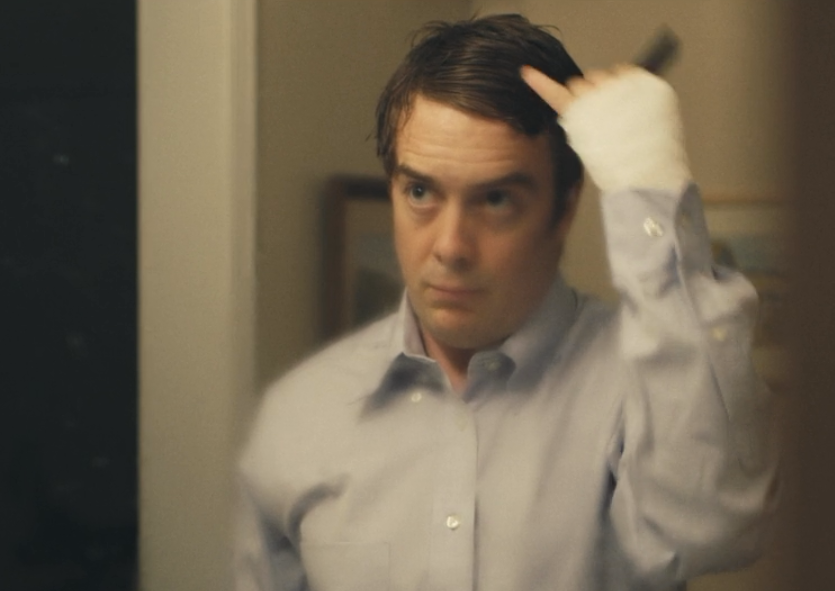
Requisite bloody-faced protagonist shot

For fans of modern horror, calling You’re Next a hidden gem is tantamount to saying, “They made a Texas Chainsaw movie before the Jessica Biel one?” If you’ve seen it, go ahead and skip to the next title (which you probably haven’t seen). However, if you haven’t seen this—or are just a fan of my wayward rants—keep reading, and consider it one of the top slasher films of the past decade, as well as a must-see for anyone with any interest in the genre.

You’re Next is a good, old-fashioned home-invasion gore fest. “Old-fashioned” is key here, because the film pays homage to a lot of ’80s and ’90s tropes (and yeah, that was a long fucking time ago in my book). The brilliant opening sequence starts in typical Scream fashion. A really hot chick (the underused Kate Lynn Sheil from House of Cards) and her scumbag boyfriend have a knifey, little run in with a masked man.

Kate Lyn Sheil

Kate Lyn Sheil, aka the indie fanboy’s new Zooey Deschanel

But before we get to the meat of the plot, something more needs to be said about this opening sequence. In particular, that Dwight Twilley song. My last post in this series included Blue Ruin, a film that paired a song and a scene in a way that I’d call among the year’s best audiovisual sequences.

Likewise, that opening sequence of You’re Next pulls an obscure pop hit and transforms it into one of the most tantalizing aspects of a great narrative. The song in question is Dwight Twilley’s “Looking for the Magic.” No, I had no idea who Dwight Twilley was before this movie. Yes, I’ve been getting weird looks the past few months while driving around town with this song playing on repeat. It’s infectious. It’s haunting. It’s usage embodies the mystique and grim humor that make You’re Next  a brilliantly chilling and morbidly comic slasher flick.

If you geek out on “The Magic,” check out this article about its origins in the film. I love the part where Twilley’s wife tells the director, “You want ‘Looking for the Magic,’ but you can’t afford the fuckin’ magic!”

It’s also priceless that the album it came off of was called Twilley Don’t Mind. If I recorded a coked-up, Donovan-meets-classic-pop-rock album it would certainly be called Adams Don’t Mind. Anyway, here’s an old recording of Jim Morrison lookalike Dwight Twilley (and yes, that’s a young Tom Petty rocking out on backup guitar).

But back to the murder at hand. A rich kid and his Aussie girlfriend (Sharni Vinson) road trip to spend a weekend with his family at their secluded mansion in the woods. It turns out that the beau’s family are a bunch of psychotic WASPs who generally hate each other. Then there’s a bloodbath wreaked by killers in cute animal masks.

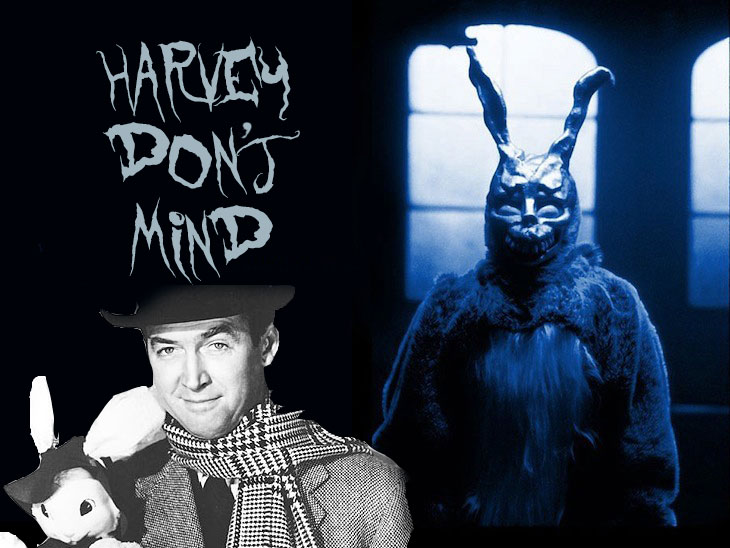
Watching uppity WASPs get axed to bits by cutesy lamb-masked villains is holiday fun for the whole family—and the type you won’t find in It’s a Wonderful Life. Speaking of Jimmy Stewart, they should do a You’re Next-style remake of Harvey where the imaginary friend is a bunny who fucks shit up. Oh yeah, Donnie Darko…

Coming soon to a theater near you...

Coming soon to a theater near you…

We find out that the Aussie protagonist (and only likable person in the movie—outside of Kate Lyn Sheil, of course, who can do no wrong), also has a background as an Outback survivalist. This comes in handy.

You’re Next‘s only fault is that it enlists some noted mumblecore directors as actors. What is mumblecore, you ask? Unfortunately, it’s not the drunken cousin of a Harry Potter wizard. In my limited research, it seems to be a cinematic platform for hipsters to wallow in their hipsterishly hipster despair (see: previous scathing rant on Drinking Buddies, et al). Put bluntly, it’s one of the worst things since Cinema Verité and the French New Wave movement. As the great Werner Herzog put it, “By dint of declaration, the so-called Cinema Verité is devoid of verité. It reaches a merely superficial truth, the truth of accountants.” In the same vein, mumblecore reaches a merely superficial truth—the truth that self-important, coffee shop filmmakers project as the truth.

Anyway, perhaps this isn’t much of a fault, because we get to see said mumblecore whiners brutally massacred. When the masks are off and the final axe is swung,You’re Next is a movie about a lot more than Dwight Twilley’s career revival and killing the shit out of hipsters and WASPs. But those reasons alone are good enough for me.

GRADE: B+ / A-
IMDb: 6.5

The Taking of Deborah Logan
Full disclosure: Despite my love of horror films, I tend to steer clear of anything involving ghosts, exorcisms or paranormal activities. The reason being that these tales involve a suspension of disbelief tied to the plausibility of a supernatural realm. I do not believe in that realm. So asking me to sit through such a flick is kind of like taking an atheist to mass. Sure, the message will be conveyed loud and clear, but an inherent disbelief in the underpinnings of such a message will make every word ring hollow.

the descent

An army of blind, albino cave-dwelling evolutionary anomalies? Plausible. Ghosts? Not so much.

Point being, it takes a lot to get me interested in any of the 5,000 Exorcist rehashings that Hollywood spews forth every year. So essentially, me telling horror fans that they have to watch The Taking of Deborah Logan is like our atheist friend saying to his atheist bros, “You gotta check out that mass—it was unbelievable!”

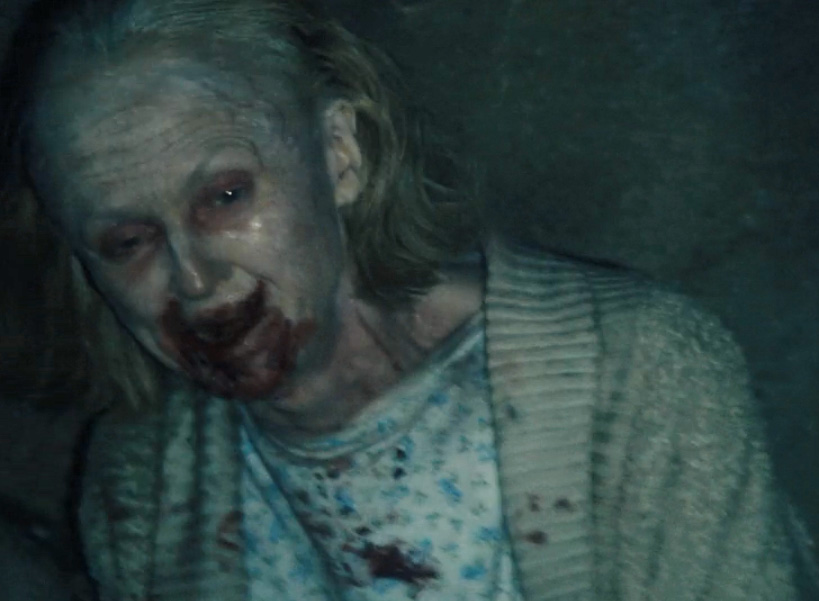
The film begins with a camera crew attempting to document the mental decline of an Alzheimer’s patient. As the patient weakens, eerie shit starts happening. As we all know, demons from the depths of hell are prone to preying on the weak and old, so it’s only natural that they’d possess our titular character.

the taking of deborah logan

“Mr. DeMille, I’m ready for my closeup.”

The Taking relies heavily on the found-footage / hidden camera blueprint of Blair Witch and Paranormal Activity. I’d argue that it supersedes both of these. For one, unlike Blair Witch, this film actually has an ending. It also has camerawork not done by someone with a bad case of the DTs. Furthermore, there’s a palatable depth to this story, thanks to some fine acting by Jill Larson and Anne Ramsay as the mother and daughter caught between a fatal disease and another form of hell on Earth.

And even for someone who’s all but sworn off supernatural flicks, this movie is downright, jump-out-your-seat scary as hell. In terms of this genre, I’d rank The Taking right alongside James Wan’s more mature efforts, like The Conjuring and Insidious (no, not Insidious: Chapter 2—that sucked. Bring me Insidious 3 and the return of the Darth Maul demon!).

insidious

The way Tiny Tim’s “Tiptoe Through the Tulips” shall be remembered henceforth

Jill Larson’s transformation from Miss Daisy to a vessel of the eternally damned is pulled off with a subtly mounting air of terror, climaxing in a terrifying finish that includes one of the most magnificently unsettling images in recent cinema. This is probably one of the most underrated new titles on Netflix Instant. Don’t sleep on it, and once you’ve seen it, don’t expect any decent form of sleep.

GRADE: B+ / A-
IMDb: 6.5

Other must-watch BONUS PICKS to keep the Netflix Instant horror marathon raging: Stake Land, Trollhunter, Let The Right One In

Note on IMDb scores: For whatever reason, horror films typically rank much lower on IMDb than their equally good, non-horror counterparts. Consider anything above a 6.2 probably worth your time. (I’ll unveil my foolproof “IMDb credibility system” at a later date.)

-Sam Adams

The best of Netflix Instant if bleak, thrilling cinema is your ASMR: Part II

blue ruin
Standard

There are times when an ordinary man needs to take matters into his hands, and more often than not, those hands end up soaked in blood. While us level-headed civilians may not partake in or even advocate for vigilante justice, the vicarious thrill of watching Joe Citizen exact revenge on the big screen is undeniable. (There’s a reason why the great Charlie Bronson was able to rattle off four Death Wish sequels.)

These films can be even more intriguing when the protagonist isn’t, say, a gun-savvy war vet (see: Clint Eastwood’s incredible performance in the otherwise-misguided Gran Torino), but rather a timid, everyday man who’s been trampled into submission by forces he’s always seen as omnipotent and beyond his control. When the switch turns for that guy, we want to know what unfolds. After all, you recognize him, don’t you?

Blue Ruin
Quentin Tarantino has made a career of dusting off forgotten pop hits and pairing them with film sequences that, in some parallel universe, they were no doubt recorded for. This brand of audiovisual synergy is a formula that most likely has Lars Von Trier and adherents of the Dogme movement screaming, “Go make a fucking music video, already!”

My two cents would be that a great scene paired with a great song is simply a way of elevating the artform and increasing its potency, thus further satisfying the beholder. Consider the scene a drug like ecstasy, and consider the song as getting head. They’re both dandy on their own, but when you’re rolling, are you really gonna turn down that added stimulation? It’s called a heightened fucking experience, amigo.

What does this have to do with Blue Ruin, one might ask? Well, alongside that Dwight Twilley song in You’re Next, I’d argue that writer/director Jeremy Saulnier’s use of Little Willie John’s “No Regrets” is among this year’s best audiovisual sequences. Maybe you should watch the movie yourself and then listen to the song, but since I’ve spent this much time waxing poetic, here’s some aural ecstasy (sans oral ecstasy):

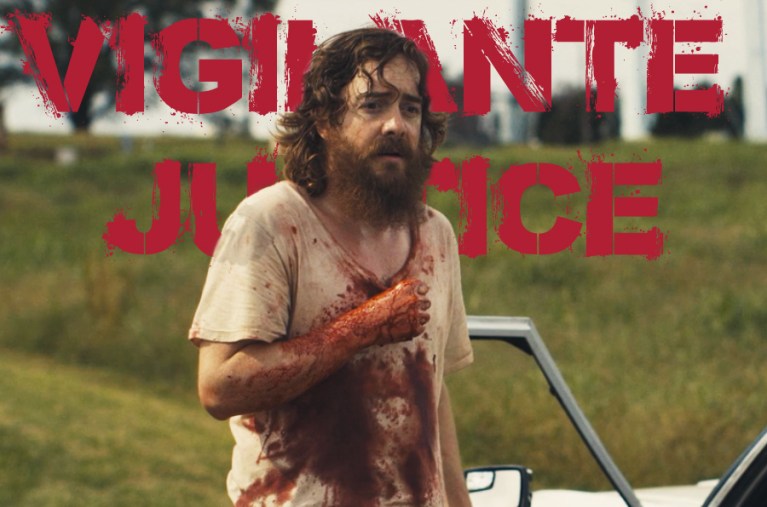
To avoid spoilers, I won’t address why this song works so beautifully in Blue Ruin. So let’s start from the top. The film opens by introducing a skittish, hobo-bearded fellow who breaks into homes to take baths, eats leftovers out of trash bins near the Delaware shore and “lives” out of his car. I say “lives,” because it’s clear from the get-go that Dwight (Macon Blair) is more dwelling in the shadow of some dark past than actually spending any time interacting with the present. As he tells his sister in an early scene with very sparse dialogue, “I’m not used to talking this much.” To be fair, if there’s anything Wayne’s World taught us, it’s that there’s not a whole lot to be said about The Diamond State…

We soon find out what dark secret Dwight is dwelling on and, of course, facing it head-on is his only means of moving forward, regardless of the bloodshed involved. Suffice it to say that Saulnier wastes no time in getting the mayhem underway.

What’s refreshing about this revenge tale is that it doesn’t merely settle for the template set by great films like Deliverance or Sam Peckinpah’s Straw Dogs, wherein the meek man becomes the he-man. The transformation in Dwight is more subtle, and often a product of dumb luck rather than heroics (look for a great side role from Devin Ratray as a gun-loving, metalhead survivalist).

Blue Ruin

Blue Ruin, aka that movie where Nathan Lane goes apeshit.

When the buckets of blood have finally washed away, Blue Ruin is a bittersweet symphony about loss and redemption via vigilante justice. It also has a wonderfully grim sense of humor, specifically when that Little Willie John song comes into play.

GRADE: B+ / A-
IMDb: 7.1  

God Bless America

God Bless America

There will be blood, and lots of it.

 Consider writer/director Bobcat Goldthwait’s maniacally dark God Bless America as a hybrid of Ned Judge’s Idiocracy and the 1970 hippie slaughter-fest Joe (no, not David Gordon Green’s mesmerizing Nicolas Cage flick, which we’ll discuss soon enough). Then throw in a healthy dose of Taxi Driver for good measure.

But wait, did you say “writer/director Bobcat Goldthwait”? Yes, the voice behind the foul-mouthed sock puppet who cleared the road for Triumph, the Insult  Comic Dog is indeed behind the lens here. And Goldthwait’s prior reputation is by no means a discredit. The film relies heavily on a brilliant sense of black humor, used to riff on pretty much everything that is wrong with modern American vanity and pop culture.

We learn early on that Frank (Joel Murray) is a guy who’s simply fed up with the lack of decency in modern society. His voice first pops up as his his whitetrash neighbors are yelling through the walls about a Michael Jackson story they’re watching on a shitty news channel. “I hate my neighbors. The constant cacophony of stupidity that pours from their apartment is absolutely soul-crushing.”

Thus begins the first in a whirlwind of cynically brilliant monologues from Joel Murray, one of those character actors who you’ll probably recognize (his turn as the barstool mailman Freddie Jackson in Shameless was one of the best parts of that show). Murray’s work is by far the crowning achievement of this movie. He channels both the wry, deadpan self-deprecation that his older brother—yeah, Bill muthafuckin’ Murray—finessed in Rushmore and the moral outrage of Peter Finch in Network.

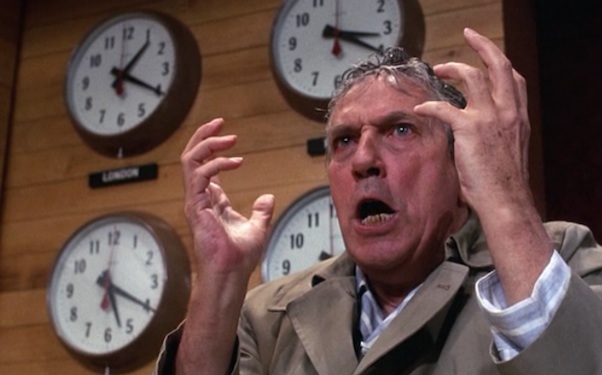
network

“I’m mad as hell, and I’m not keeping up with the Kardashians anymore!”

His disgust with everything from American Idol judges laughing at mentally challenged contestants to gay-bashing right-wingers finally comes to a breaking point when his pathetic life hits rock bottom. First, he’s fired from work on sexual harassment charges for sending flowers to a sick coworker. (And this might sound grandiose, but I’d argue that Goldthwait’s hyperbole here is a vital riff on the personal insensitivity in modern work environments.) Then his schmuck of a doctor tells him he has a brain tumor.

After a twist of fate rules out suicide, Frank goes on a killing spree with a hit list of pretty much any person who is “unkind or indecent.” And you side with the guy because at heart, he’s a teddy bear who cares about the goodness in people, and just happens to wield an AK-47. (Apropos of my note on Eastwood, Frank actually is a gun-savvy war vet, but that doesn’t really matter—it’s a comedy, and he certainly fits the mold of Joe Citizen.)

The only thing that irks me about this movie is that it does have a touch of Diablo Cody-esque, nagging self-awareness. I bring this up because Frank’s annoying sidekick, Roxy, is used more as platform to convey Goldthwait’s strong opinions than as an actual character (see: every character ever written by Diablo Cody). This shtick would get unbearable if it weren’t for the fact that, unlike Hollywood’s favorite no-talent ass-clown of a screenwriter, Goldthwait is not trying to show off how ironically cool his personal opinions are. Instead, he’s using this tool to outline the hideous, vain minutiae that, when compacted, is the face of our warped society.

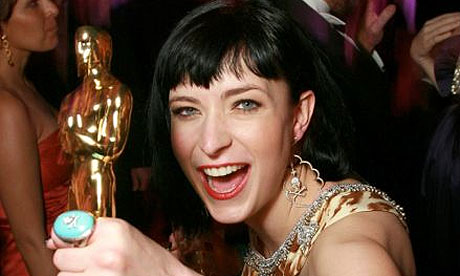
Diablo Cody

Diablo Cody, aka the worst thing to happen to keyboards since Chuck Palahniuk and Tucker Max.

I did almost punch the screen when Roxy went off on a tangent about why Alice Cooper was the god of everything (like Ellen Page vocally jerking off to Daria Argento via Diablo Cody), but Frank saves the day just in time:

Frank: “Are you ADD, Juno?”

And Roxy redeems herself with this: “That’s who we should kill next. Fucking Diablo Cody. She’s the only stripper who suffers from too much self esteem.”

This tongue-in-cheek self-awareness that’s aware of its self-awareness is the only part of God Bless America that really doesn’t make sense to me. Perhaps Goldthwait is trying to tear down a horrible mechanism with the very same tools it was built with … but that might be reaching. And I really can’t stand Roxy’s character. This said, I’m hard-pressed to think of a better take on the most trashy and heartless elements of our modern society, and aided by Murray’s stellar performance, Goldthwait delivers a film that is as vicariously thrilling and hilarious as it is sociopolitically relevant.

GRADE: B+
IMDb: 7.3  

-Sam Adams

The best of Netflix Instant if bleak, thrilling cinema is your ASMR: Part I

BBC crime shows
Standard

Autonomous sensory meridian response (ASMR) has quickly become the Internet’s answer to Klonopin. Unfortunately, I don’t happen to be among those lulled into a happy place by videos of 15-year-old girls whispering about how it feels to wash their hands with a bar of texturized chamomile soap. No, my go-to for bedtime relaxation comes more in the form of films and shows that rely heavily on, say, depictions and existential conversations predicated upon bodily dismemberment.

Buffalo Bill

The title of an ASMR video I would watch

Why? I have no clue. And for the moment, this isn’t about why (although I’m sure I’ll have to tackle that at some point). The underlying crux of this blog series is to foster a space for recommending and discussing some of the best and most gruesomely soothing films/shows out there. If you consider Winter’s Bone, True Detective and The Descent to be among the past decade’s seminal moving-picture achievements—and are simply craving more, but don’t where to turn—then welcome.

If you’re as obsessed with these genres as I am, you likely know that spending half an hour on Google attempting to find something that fits within their parameters is, nine times out of ten, an exercise in futility.

To that point, I’m simply sick and tired of every “Best on Netflix you might not have seen” list trying to convince me that Drinking Buddies, Don Jon and Prince Avalanche aren’t somehow going to make me head to Hollywood and craft a Buffalo Bill-style human-skin coat out of Joseph Gordon-Levitt, the Duplass Brothers and Diablo Cody.

Seriously, I will wear that shit in public to boycott the premiere of Greta Gerwig and John Kransinki’s newest project about a couple of upper-middle class white people who wear flannel and resolve emotional issues to the tune of ten Kimya Dawson songs and then learn something about themselves. (It’s still in the works, but I believe they’ve tentatively titled it We Are Here Now and Were There.)

Indie trash

Yeah, yeah, go fuck yourself.

I digress. What we’re talking about here is your dark minds benefiting from the rotten fruits of my labor. Said “labor” being perhaps an unhealthy amount of man-hours browsing reddit subpages over the past year to provide you with some of the sickest, most brilliant diamonds in the rough that you can access through Netflix Instant. Why this specific portal, you ask? Because everyone and their grandmother’s fuckin’ cousin has it, I respond.

So, without further ado, I think it’s time we talk about Kevin… er, shows and movies. Let’s talk about shows and movies. Here’s our genre for the first installment:

BBC (BADASS BASTARDS AND COPPERS):

Peaky Blinders
Fuck, I thought at first. Cillian Murphy as the leader of a Birmingham street gang that slashes peoples’ eyes via razor-embedded scally caps? It all sounded good outside of Cillian Murphy. While he was great in 28 Days Later (and sure, he was Scarecrow in the Dark Knight films), the guy is prettier than the love child of a young Rob Lowe and Kiera Knightley donning a powder blue bunny suit. So, me asks, how the fuck is Cillian gonna pull this off?

No worries, mate. By the end of the first season, I’d rather cross paths with Bane in a dark alley than serve the menacing Thomas Shelby with an improper shoeshine. Oh, and speaking of Bane, Tom Hardy enters in the forthcoming Season 2. My knickers are already wet.

cillian murphy

The baddest pretty boy since Gosling in Drive !

About that title: Yeah, it sounded pretty goofy to me at first—as it might to many Yank viewers. Rest assured, Peaky Blinders is not about a middle-school boy with a hot neighbor and a pair of binoculars.

So how would I sum it all up? It’s essentially a hybrid of Sons of Anarchy and Boardwalk Empire, with a little splash of Gangs of New York. Thomas Shelby is Jax Teller, if Jax Teller operated out of Birmingham in the early 20th Century. He’s a young, dashing, masterfully calculating gang leader who couldn’t tell you what fear was if it bit him in the ass. But along with the calculation, there’s some stoicism, which is why I also see a bit of Nucky Thompson in him. And if this show catches on, a whole new wave of Jimmy Doherty-esque haircuts will be lurking around a hipster cocktail lounge near you.

peaky blinders

Party like it’s 1919…

As for drawbacks, it’s completely overstylized—almost to the point of camp—but that’s also what makes it kind of fun. Why not play a Nick Cave ditty as a smartly-dressed chap walks through the streets with flames billowing at his back while obsequious townfolk quiver in his wake? This is exactly what Hell on Wheels was trying to pull off (and “Red Right Hand” is one of the best intro songs since The Wire tapped Tom Waits). Perhaps Peaky Blinders ain’t as highbrow as the first two seasons of Boardwalk (let’s be realistic, that show went to shit), but it is some bloody and fiendishly good fun.

SEASON ONE GRADE: A-
IMDb: 8.5

Happy Valley
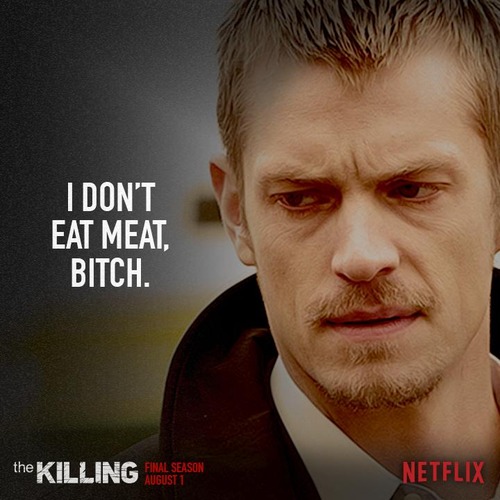
Many bemoan the downfall of the American version of The Killing after that horrible cliffhanger in the first season. Fair enough, but I stuck with the show simply because, well, it was gloriously dark. And I have yet to encounter better cinematographic use of a geographical environment this side of Breaking Bad or Twin Peaks. Oh, and Holder was just one hilarious, bad-ass honky. 

The man, the myth, the Holder

The man, the myth, the Holder

The reason I bring up The Killing is because of how strikingly similar it is in theme and general aura to Happy Valley. Detective Catherine Cawood is a slightly mentally off-kilter, divorced female cop with a dark past and a son who intermittently hates her. She also lives in a town that is perpetually gray, is constantly trying to quit smoking, likes sleeping with married men and is, despite her uncontrollable moodswings, highly efficient and always right when everyone else doubts her. Sarah Linden, anyone? (Speaking of striking similarities to other shows, there’s this turtley little weasel of an accountant who looks like Wormtail from Harry Potter and is the embodiment of Walter White back in his Mr. Chips days. Great character.)

Unlike The Killing, the six-episode-long Season One of Valley delivers. I mean, it fucking delivers. And between involuntary smack injections, basement rape (yeah, that stuff’s hard even for me to watch) and dousing children with gasoline, grimness is Happy Valley’s oh-so-sunny calling card.

"Pardon me, would you have any Grey Poupon?"

It ain’t exactly, “Pardon me, would you have any Grey Poupon?”

While we’re on the subject of female-detective BBC shows, if you’re choosing between this and Top of the Lake, take the advice of the great Bob Dylan, babe, and don’t think twice. Apart from one great character, Top of the Lake is pretty much the bottom of the well when it comes to BBC cop series.

Final note on why you should watch Happy Valley: The fella that plays the pseudo-psycopathic Tommy Lee Royce (James Norton) is the second-coming of Tom Hardy. Guy has serious acting chops, and he’s certainly the sexiest sexual deviant psychokiller since Jamie Dornan in The Fall. Speaking of which…

SEASON ONE GRADE: A
IMDb: 8.5

The Fall
Perhaps the hardest thing to get past in the first episode of The Fall is just how flawlessly fucking fair Gillian Anderson’s skin is. That skin is fairer than a cup of tea sipped quietly by Monet in a field of wheat on a fine spring day. I mean c’mon, she was Scully before Vince Gilligan was out of his screenwriting diapers. … But yeah, after that Duplass Brothers skin-coat thing, maybe I’ve been talking about skin too much. Fun fact: Did you know that Ed Gein lived 30 minutes from where I’m writing this? (Don’t worry, I don’t have an epidermal fixation or any skeletons in my closet. I’m just being tongue-in… whatever-you-call-that-space-beside-the-teeth-where-there-used-to-be-flesh.)

The Fall

“Why yes, I believe that is me in The Birth of Venus.”

Moving on, The Fall is yet another grim, tension-riddled cop-thriller with a bad-ass female lead investigating a spate of killings. (For whatever reason, feminism seems to be alive and well in the cop-vs.-serial killer genre.) While there are any number of comparisons that could be made between The Fall, The Killing and Happy Valley (the mood-setting bleakness of Belfast, say), this show does women coppers the service of a portrayal that’s the exact opposite of that “off-kilter and mentally distressed” blueprint.

Gillian Anderson is brilliant, and her icy depiction of investigator Stella Gibson leaves little room for sentiment, nonsense or anything other than heady police work. That’s good. Because the sadist she’s tracking (Jamie Dornan) is a perverted family man who gets off on choking his victims to death and then scrapbooking about them with artwork that is unsettlingly exquisite.

As the body count piles and the investigation deepens, the tension rises to a pitch that makes The Fall arguably as engrossing as True Detective. Of the three shows I’ve discussed, this one is probably the best. The only disappointment is that Season One is criminally brief (5 episodes) and ends with an asshole of a cliffhanger.

And by the way, John Oliver can shove it. Jamie Dornan is so my Christian.

SEASON ONE GRADE: A-
IMDb: 8.2


Final note:
Consider all three of the aforementioned shows as far superior to BBC-via-Netflix Instant alternatives like Luther, Sherlock and Top of the Lake. British Stringer Bell, er, Idris Elba is great in Luther, but the show lacks the depth of Happy Valley and The Fall, and the entertainment value of Peaky Blinders. And by “depth,” I’m talking about that intangible quality that distinguishes a great cable show like Breaking Bad or The Wire from, say, a regular-channel favorite like Law & Order (again, another topic I’ll save for a rainy day). As for Sherlock, Benedict Cumberbatch exudes a particular brand of smug that just pisses me off, and his Holmes offends my boyhood notions of a beloved literary character. The show is also completely overstylized—just not in a good way, like the way Peaky Blinders makes me eager to sew razor blades into my cap.

-Sam Adams